
Pilonidal sinus. We will try to simplify the answers to questions: What is it, how is it treated or operated on, what are its causes, the use of lasers in prevention methods, and the theory of its formation.
Definition of Pilonidal sinus:
This condition is characterized by very small openings in the skin around the coccyx (lower back) that are connected to a subcutaneous sacs containing purulent secretions and hair. Sometimes, the condition appears as a painful swelling or abscess in this area.
Symptoms of pilonidal sinus:
– Very small openings in the coccygeal area at the bottom of the back (natal cleft area).
– Pain or swelling in the coccyx area, especially if accompanied by inflammation or an abscess.
– Bad odor resulting from secretions from the fistula in the coccyx area.
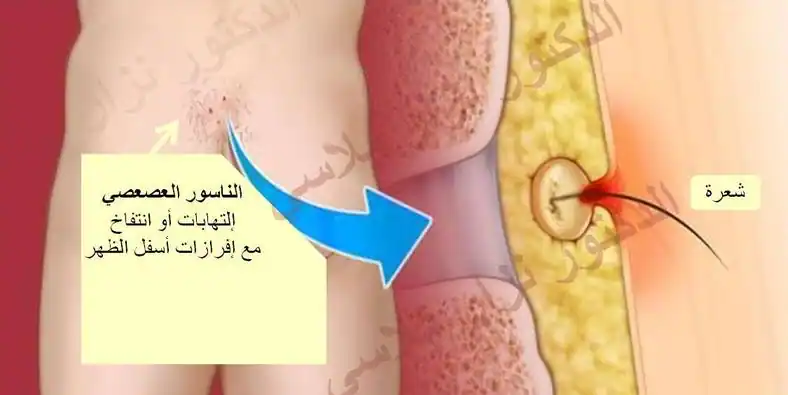
Causes of Pilonidal sinus:
We find it essential to understand one theory of its formation, which is simply the hair that falls from the back becomes embedded under the skin around the coccyx area at the bottom of the back (i.e., it penetrates the skin) – see picture – and then a cyst forms under the skin containing some of the fallen hair along with secretions. These secretions exit through very small openings on the skin’s surface, causing the unpleasant odor to be noticed in this area.
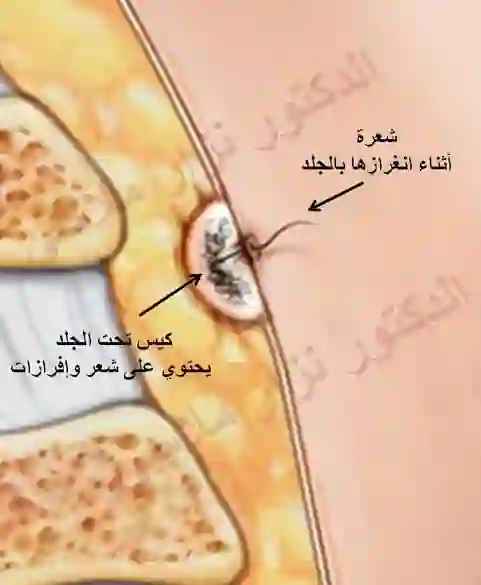
It is worth noting that sometimes this cyst under the skin swells and becomes inflamed, and is then called a Pilonidal abscess, which is accompanied by pain.
Factors that may contribute to the formation of Pilonidal sinus:
– The presence of Excessive hair on the back, especially thick hair or the lower back (see above on how the Pilonidal sinus is formed and the causes thereof). Therefore, some people may remove the hair with a laser, for example.
Obesity is one of the factors contributing to its formation.
– Sitting for a long time, especially when driving a car for long periods (such as truck drivers)
Prevention of Pilonidal sinus:
The advice here is to try to reduce the factors that contribute to its formation, such as keeping the area clean and dry or maintaining a moderate weight, especially after treatment, to prevent recurrence.
Treatment of Pilonidal sinus:
Treatment involves surgery to remove the cyst. There are numerous methods and techniques for treating a fistula, also known as a Pilonidal cyst. We do not intend to delve here into the surgical and technical details.
The answer to the question (the best doctor to treat fistula? or the best doctor to treat fistula in your area?) ). It depends on several factors, the most important of which is his specialization in the field of these operations (pilonidal sinus surgery) and the experience in various techniques for its removal.
Your surgeon will usually either close the incision or leave it open. This depends on many factors, including whether the fistula is swollen, inflamed, or has an abscess. We prefer the closed method when performing surgery.
We recommend that the operation be performed by a surgeon who is experienced in the techniques used to perform these operations. We also recommend avoiding factors that may contribute to its formation and recurrence.

